What a Proofread Covers
What We Actually Check When We Proofread Your Manuscript
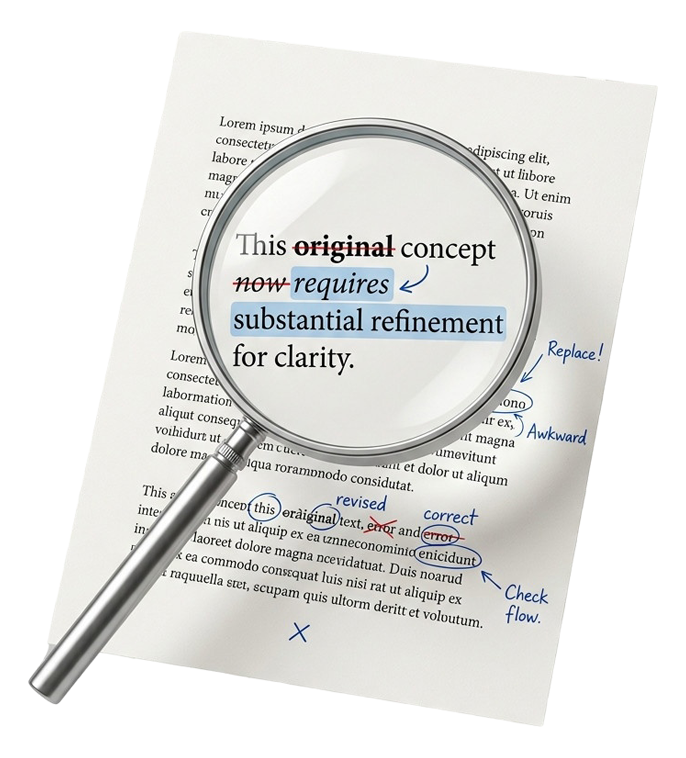
Proofreading is the final stage of getting a manuscript ready. It comes after editing, not instead of it. By the time your book reaches the proofreading stage, the structure and content should already be settled. Our job is to catch the small things that would otherwise slip through.
Here is what our proofreaders look at line by line:
Spelling mistakes, including words that are spelled correctly but used wrongly (their instead of there, for example)
Grammar errors and awkward sentence construction
Punctuation, including commas, full stops, quotation marks and apostrophes
Consistency in spelling and style throughout the whole book (we use Irish or British spelling as agreed with you)
Formatting issues such as inconsistent chapter headings, spacing, and paragraph breaks
Repeated words, missing words, and typing errors
Consistency in character names, place names, and timeline details in fiction
Correct use of numbers, dates, and capital letters
We do not rewrite your voice or change your story. A proofread is about correctness, not about reshaping your writing. If we spot a bigger issue, such as a plot inconsistency or a section that reads unclearly, we will flag it for you, but changing the content itself is your decision, not ours.
A lot of authors ask us how proofreading is different from a simple spell check on a computer. The honest answer is that a spell checker only catches words that are not real words. It will not notice that you have written “form” when you meant “from,” and it has no idea whether your character had blue eyes in chapter two and brown eyes in chapter ten. A human proofreader reads for meaning as well as spelling, which is why software alone is never enough for a book you plan to publish.