Every author gets asked the same question sooner or later. A reader finds your book, loves it, and wants to know where else to find your work. A journalist wants a bio and a photo for a feature. A bookshop wants a press pack ahead of an event. If the honest answer to "do you have a website?" is no, you've just handed that reader, journalist, or bookshop back to a search engine, where anything could turn up, including nothing at all.
That's the real reason the question "how much does a website cost in Ireland" keeps coming up among authors. Not because a website is a nice extra, but because it's quickly becoming the one piece of infrastructure every serious author needs, and the one piece most authors put off the longest. Part of the hesitation is simply not knowing what you're paying for. Is it a few hours of someone's time? A full design project? A subscription you'll be paying for as long as the site exists?
This guide walks through exactly what shapes the cost of an author website in Ireland, from the pages you actually need to the ongoing work nobody mentions until the first renewal notice lands. We won't be quoting specific figures, because every author's needs are different, and a number that fits a debut poet with one slim collection won't fit a novelist with six books, a backlist, and a mailing list of ten thousand readers. What we will do is give you everything you need to understand your own options, weigh them against your own situation, and ask for an accurate quote with confidence.
By the end, you should be able to walk into a conversation with a provider knowing exactly what you need, why it's priced the way it is, and what questions to ask before you commit to anything.
It's worth saying clearly at the outset: this guide won't give you a single figure, and that's a deliberate choice rather than an oversight. Generic numbers floating around online are usually written for small businesses in general, not authors specifically, and a figure pulled from a shop or a restaurant website has little bearing on what you, as a writer, actually need. The far more useful approach is to understand the moving parts, because once you do, you'll recognise a fair quote when you see one, and you'll know exactly what questions to ask if a quote seems too vague to trust.
Why Every Author in Ireland Needs a Website
Social media comes and goes. Platforms change their algorithms, accounts get suspended for reasons nobody can fully explain, and a following built up over years can vanish along with the app itself or a single policy change you had no say in. An author website is the one piece of your online presence you actually own outright. Nobody can shut it down, change its rules overnight, or bury your posts behind a paywall you never agreed to.
For readers, a website answers the questions social media was never designed to answer well. What have you written? Where can they buy it? Is there a next book coming, and when? For agents, publishers, and press, a website is often the first thing they check before replying to an email, because it tells them whether you're set up to be worked with professionally or whether you're starting from scratch. For bookshops and festival organisers, it's where they go to find your bio, your photo, and your contact details without having to chase you down directly.
A website also does something social media was never built to do well. It gathers your readers in one place you control, usually through a mailing list signup, so that when your next book is ready, you're not relying on an algorithm to decide who sees the news. Closing that gap is exactly what a proper author website is for, and it's one of the author website services Ireland Publishing House builds specifically with writers in mind, rather than adapting a generic small business template and hoping it fits by accident.
There's also a longer-term case for having a website. Your backlist doesn't disappear when a book stops being actively promoted, but it can become invisible if there's nowhere central for a curious reader to find it. A website keeps every title you've ever published findable in one place, long after any individual marketing push has ended.
Think, too, about the author you'll be in five years, not just the author you are right now. A debut author with one book has fairly simple needs, but careers tend to grow. More books get added, more events get booked, more interviews come in, and a website built with room to grow handles that far more gracefully than one that was only ever designed to hold a single title. Setting up the right foundation early, even in a modest way, usually costs far less in the long run than rebuilding everything from scratch once your catalogue has outgrown what you originally built.
There's a practical dimension too, beyond the career-building case. A website is where you control your own narrative. Social media posts are brief by design and get buried within hours. A website page about your latest book stays exactly where you put it, findable by search engines and visible to anyone who looks you up, for as long as the site exists. That permanence is quietly valuable in a way that's easy to underestimate until you actually need it, such as when a reader stumbles across your name months after a launch and wants to know more.
What Goes Into an Author Website
Before you can understand what shapes the price, you need to know what you're actually building. Not every author site needs the same pages, and the sites that try to do everything at once from day one usually end up the most expensive to build and the hardest to keep maintained afterwards.
The Pages Every Author Site Needs
Most author websites, whatever the genre, share a handful of core pages. A home page that makes a strong first impression within seconds, since most visitors decide whether to stay or leave almost instantly. An about page that tells your story, not just your biography; this is often where knowing what a blurb is and how to write one comes in handy, since your about page works on the same principle of hooking a reader quickly rather than listing facts in order. A books or catalogue page listing everything you've published, ideally with cover images and short, enticing descriptions. Clear buy links pointing to wherever your books are actually sold, whether that's physical copies through book printing or a listen-anywhere option through audiobook services. A simple contact page or form so people can reach you without having to track down a personal email address. For most authors, these five pages cover the essentials. Many authors also add an events or press page early on, for appearances, interviews, and media requests, even though it's less universal than the rest.
The Extras That Add Complexity
Beyond the basics, plenty of authors add features that genuinely improve the site but also add to the build. A mailing list signup connected to an email platform, so you can build and keep your own list of readers. Buy buttons linking to multiple retailers rather than just one, which matters once your book is available in several formats and territories, including through Amazon Kindle publishing. A press kit page with downloadable bios, headshots, and cover images for journalists who don't have time to ask for them individually. An events calendar that updates automatically rather than needing manual edits every time. Pages in more than one language if you're pursuing foreign rights deals or writing for a bilingual readership. None of these are essential on day one, but each one you add increases both the initial build and the ongoing upkeep that follows.
Feature | Essential or Optional | Why It Matters |
Home page | Essential | First impression and navigation hub |
About/bio page | Essential | Builds trust with readers, press, and agents |
Books/catalogue page | Essential | Shows your full body of work |
Buy links | Essential | Converts visitors into actual readers |
Contact page or form | Essential | Lets press, event organisers, and readers reach you |
Events/press page | Optional | Useful once you're doing events or interviews regularly |
Mailing list signup | Optional | Builds a readership you control directly |
Multi-retailer buy buttons | Optional | Matters more once you're on several platforms |
Press kit page | Optional | Saves time once media requests become regular |
Multilingual/rights pages | Optional | Relevant mainly once foreign rights are in play |
The Three Main Ways to Build an Author Website in Ireland
Once you know what you need, the next decision is who builds it. Broadly, authors in Ireland choose between three routes, and each comes with its own balance of time, effort, and long-term suitability. There's no single right answer here; the right route depends on your budget, your technical comfort, and how much of your own time you want to spend managing a site rather than writing your next book.
Building It Yourself
Plenty of authors start by building their own site using one of the many do-it-yourself website platforms available. This route puts you in full control and lets you move at your own pace, which suits authors who enjoy tinkering and have the time to spare, particularly earlier in a career when budgets are tighter and the catalogue is still small.
The trade-off is that what looks simple in a demo video often gets complicated fast once you're trying to manage a growing catalogue, multiple buy links per book, or a mailing list integration that actually works properly the first time. Author-specific needs, like keeping a catalogue page tidy across several books or making sure search engines can find you by name rather than by generic keywords, tend to be exactly where general-purpose builders show their limits. Many authors who go the DIY route end up spending far more time than they expected troubleshooting things that should have been straightforward, and some end up calling in help later anyway to fix or rebuild what they started from scratch.
There's also the question of what happens if you lose interest or run out of time halfway through. A half-finished DIY site, live and visible to the public, can do more harm to your professional image than having no site at all.
Hiring a Freelancer
A freelance web designer or developer is a common middle ground between doing it yourself and bringing in a larger provider. You get someone dedicated to your project, often at a pace that suits a smaller budget, and the result is usually more polished and better suited to your actual needs than a DIY build, assuming you find the right person.
The quality of this route depends heavily on the freelancer's experience with author websites specifically, as opposed to general business sites. A freelancer who's built plenty of restaurant and shop websites may not instinctively understand why your catalogue page needs to scale cleanly as you publish more books, or why your buy links need to be easy for you to update yourself after every new release without having to go back to them for every small change. It's worth asking any freelancer directly whether they've built author or writer websites before, and asking to see examples if they have.
Working With a Publishing Partner
The third route, and for most authors the one that makes the most sense once you weigh it against the other two, is working with a service built specifically around authors, where the website sits alongside everything else involved in getting your book in front of readers. This is where Ireland Publishing House's author website service fits in, alongside its wider book publishing support. Rather than treating your site as a one-off project disconnected from your book, it's built with the same understanding of what a catalogue page, a buy-link structure, and an author bio actually need to do for a working writer, from the very first conversation. If you're still weighing up providers in general, the roundup of the top 10 self-publishing companies in Ireland is a useful piece of background reading before you decide who to work with.
It's worth setting this route directly against the other two, because the differences go well beyond who clicks the buttons to build the site. On time, a DIY build asks the most of you personally, since you're learning the platform, making every design decision, and troubleshooting every problem yourself, often while you'd rather be writing. A freelancer takes that burden off your hands, but you're still the one coordinating timelines, chasing updates, and explaining your project from scratch to someone who's never worked on an author site before. A publishing partner takes the least of your time overall, because the person building your site already understands what an author's catalogue, buy links, and bio need to achieve, without you having to explain the basics first.
On overall value, the comparison isn't simply about which route costs the least upfront. A cheap DIY build that eats weeks of your time, or a freelancer quote that looks attractive until the ongoing support turns out to be billed separately every single time, can end up costing more in time, stress, and repeated spending than a single coordinated service would have in the first place. Working with a publishing partner tends to represent better overall value precisely because it avoids that pattern: one point of contact, one shared understanding of your book, and no duplicated costs from having to fix or rebuild work that wasn't suited to an author site to begin with.
There's also a coordination benefit that's easy to miss until you've experienced the alternative. If your cover designer, your editor, and your website builder are three completely separate people with no shared context, you end up being the one who has to explain the same background information three times, chase up three separate timelines, and spot any inconsistencies yourself because nobody else is looking at the whole picture. Working with a single publishing partner removes a lot of that friction, since the same understanding of your book carries across every part of the project rather than resetting with each new provider.
This route suits authors who want the site handled properly without having to become their own project manager, and it's particularly useful if you're also using other publishing services, since everything can be coordinated together rather than juggled across separate providers who have never spoken to each other and don't know what the others are doing.
Route | Control | Time Investment | Ongoing Support | Best Suited To |
DIY website builder | High | High, ongoing | None built in, you manage everything yourself | Authors with time, patience, and basic technical comfort |
Freelancer | Medium | Medium | Varies, often ends once the project is handed over | Authors wanting a tailored result on a flexible timeline |
Publishing partner | Low to medium | Low | Built in and coordinated with your other publishing needs | Authors who want the site handled properly alongside everything else involved in getting their book published |
What Actually Affects the Price
Rather than quoting figures that would be out of date within months or simply wrong for your particular project, it's far more useful to understand the factors that move the price up or down. Once you know these, you'll be in a much stronger position when you do request a quote, and far less likely to be either overcharged or caught out by a figure that seemed low until the extras started appearing.
How many books you're showcasing. A debut author with one title needs a far simpler catalogue structure than someone with a six-book backlist spread across two series, each with its own look and buy links.
Custom design versus a template. A fully custom look, built from scratch around your own branding and genre, takes longer to design and build than adapting an existing template, and that extra time is reflected in the final figure one way or another.
What you can supply yourself. If you already have professional author photos, a polished and proofread bio, and finished cover images ready to go, you'll save on the work needed to source or create them. If none of that exists yet, expect the project to include more groundwork before the site itself can even begin.
How much SEO and discoverability work is included. A site built so that readers searching your name or genre can actually find you among thousands of other results takes more planning and structure than a page that simply exists on the internet.
Mailing list and launch functionality. Integrating a signup form with an email platform, building a launch countdown, or setting up automated welcome emails all add scope beyond a basic static site.
Who's building it and where they're based. Rates vary between freelancers and larger providers, and location can play a part too, with providers based in larger cities sometimes charging more than those elsewhere in the country.
Ongoing support needs. A site you'll want regular help maintaining long-term is priced differently from one you're happy to manage entirely yourself after launch, with occasional help only when something breaks.
How quickly you need it done. A tight deadline, ahead of a launch date that's already been announced, can affect price differently than a project with a flexible timeline.
None of these factors have a fixed answer that applies to every author, which is exactly why getting a personalised quote matters more than trying to work from a generic figure you saw somewhere online that was written for a completely different kind of project.
It also helps to think about price as reflecting effort and expertise rather than as an arbitrary number attached to a product. A site that looks simple on the surface can still involve careful decisions behind the scenes: how your catalogue is structured so it scales as you publish more books, how your buy links are organised so you can update them yourself without calling anyone, how your about page is written so it actually represents you well to a stranger. None of that happens by accident, and all of it takes real time, which is ultimately what you're paying for whichever route you choose.
A useful way to approach any quote you receive is to ask what specifically is included in that figure, rather than accepting a single lump sum at face value. Does it cover the design, the build, the content structure, and a period of support afterwards, or does it cover only the build itself, with everything else billed separately as it comes up? Understanding exactly what's bundled together helps you compare quotes properly, rather than comparing two numbers that actually represent very different amounts of work.
Ongoing Costs to Plan For
A website isn't a single payment and then nothing more. Even the simplest author site comes with a handful of recurring needs, and it pays to know about them before you start rather than being caught by surprise later, once the site is already live and you're relying on it.
Domain renewal. The web address you choose, ideally your own name or a close variation of it, needs to be renewed on a regular basis to keep it under your control. Letting it lapse accidentally can mean losing it to someone else entirely.
Hosting. Your site needs somewhere to live online, and hosting is typically billed on an ongoing basis rather than as a one-off cost, much like a utility bill rather than a single purchase.
Maintenance, backups, and security. Software behind the scenes needs updating, backups need to be kept in case anything goes wrong, and security needs monitoring, particularly if your site handles any reader data through forms or sign-ups.
Updates around each new release. Every time you publish a new book, your site needs updating: a new cover to add, new buy links, a refreshed catalogue page, and possibly a new events listing if you're touring or doing launches. It's worth running any new copy going onto the site past book editing and proofreading before it goes live. If you'd like a sense of what that stage typically involves, the guide on how much book editing costs in Ireland is a useful starting point. And if the book itself still needs book formatting for print or digital release, the guide on the cost of formatting a book in Ireland is worth a read alongside this one.
Ongoing Item | How Often | Why It's Needed |
Domain renewal | Annually, typically | Keeps your web address under your control |
Hosting | Ongoing, usually billed annually or monthly | Keeps your site live and accessible |
Backups and security updates | Regularly, often automated | Protects your site and any reader data collected |
Content updates | Each new release or major announcement | Keeps your catalogue and buy links current |
If you're handling any reader data through your site, such as a mailing list signup or a contact form, it's also worth being aware of your data protection responsibilities under Irish and EU rules, which apply to individual authors collecting personal details online just as much as they apply to larger businesses. A clear privacy notice and a sensible approach to how long you keep that data go a long way toward handling this properly from the start.
It's worth budgeting mentally for these ongoing items the same way you'd budget for any other recurring commitment in your writing life, rather than treating the initial build as the end of the spending. Authors who plan for this upfront rarely feel caught out later, while authors who only think about the build itself are often surprised when the first renewal notice or maintenance request arrives. Asking your provider upfront exactly what ongoing costs to expect, and how often they recur, removes almost all of that uncertainty before it has a chance to become a problem.
Add-Ons Authors Often Forget to Plan For
Beyond the website itself, several related needs tend to catch authors by surprise because they're easy to overlook until you're actually building the site and realise you need them right away, not at some vague point in the future.
Professional author photography. A clear, well-lit photo makes a real difference to how your about page and press kit come across, and it's worth treating as a separate piece of planning from the website build itself rather than something to sort out at the last minute.
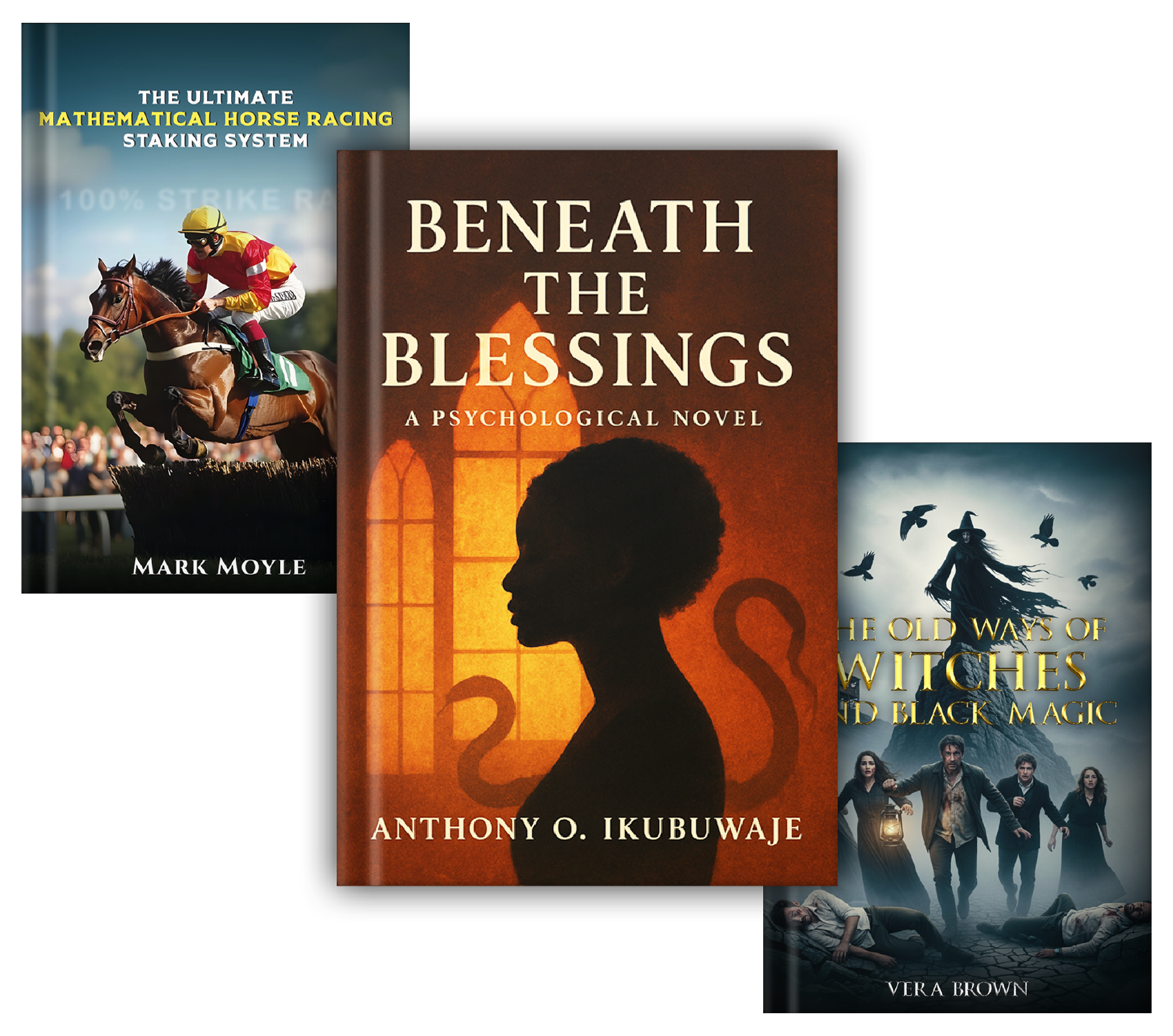
Cover image rights and display. If you didn't commission your own covers, or if you're working with a publisher, it's worth confirming you have the right to display cover images on your own site before the build begins. If you're still deciding on your covers, book cover design support and the related guide on how much book cover design costs in Ireland are both useful starting points.
A trailer or promotional video. More authors are adding short video content to their sites and social channels ahead of a launch, and a dedicated book video trailer is worth planning for separately from the website itself, since it's its own project with its own timeline.
Copywriting for your own bio and book descriptions. Writing your own bio and book descriptions sounds simple until you're staring at a blank page trying to describe your own work objectively. If you'd rather have someone else write that content for you entirely, that's a different service again: ghostwriting covers longer-form content written on your behalf, and for novelists specifically, fiction ghostwriting can shape an about page or book description so it actually captures the tone of your work. The guide to the best ghostwriting services in Ireland is worth a look if this is a route you're considering, and the companion piece on what a ghostwriter typically costs in Ireland is a useful read alongside it.
Translation or rights pages. If you're pursuing foreign rights or have titles available in more than one language, pages built specifically for that audience are worth factoring in separately from your main site, since they often need their own structure rather than a simple translation of existing text.
Illustrated pages for children's books. If any of your catalogue includes books for younger readers, your site may need space for sample book illustration pages or a preview spread, something the guide on how much to charge for book illustrations in Ireland goes into in more depth. Children's book publishing has its own particular needs here too, and the guide on the cost to publish a children's book in Ireland is a useful companion read if that's part of your catalogue.
Getting Readers to the Website Once It's Live
Building the site is only half the job. A finished author website with nobody visiting it doesn't do much for you, which is why it's worth thinking about how people will actually find it from the moment it launches, rather than treating that as an afterthought once the build is finished.
This is where book marketing comes in, whether that's a launch campaign timed to coincide with your new site going live, ongoing social promotion that funnels people back to your buy links, or simply making sure your site is structured so search engines can find it when someone looks up your name or genre. The guide on how much book marketing costs is a useful companion read if you're planning that side of things alongside your website.
Your website is the place everything else comes together: the finished book, the cover, the author photo, the marketing push, all pointing back to one site you control. That's also why Ireland Publishing House builds author websites as part of that wider picture, rather than as an isolated service disconnected from everything else involved in getting a book to readers.
Questions to Ask Before You Request a Quote
Getting an accurate quote starts with asking the right questions upfront, both of yourself and of whoever you're speaking to, rather than simply asking "how much" and hoping for a figure that means something.
What's included after launch? Some providers hand over the finished site and step away entirely. Others include a period of support or ongoing maintenance as part of the original arrangement. Know which you're getting before you agree to anything in writing.
Who owns the domain and the content? Make sure you, the author, retain ownership of your own domain name and the content on your site, regardless of who built it for you. This matters far more than it might seem at the outset.
Is ongoing support included or billed separately? If your site will need regular updates, particularly around each new release, clarify upfront whether that's part of the original arrangement or an extra cost each time something needs changing.
What happens when you publish your next book? Ask specifically how adding a new title to your catalogue is handled, since this is one of the most common points of confusion after the initial build is finished and the invoice has already been paid.
How much input will you need to provide along the way? Some providers need detailed direction at every step, while others can work from a brief with minimal back and forth. Knowing which applies helps you plan your own time around the project.
A Practical Checklist for Authors Before Building a Website
Before you contact anyone about building your site, a little preparation goes a long way toward keeping the project smooth and the eventual quote accurate from the start.
Decide which of your books need to be featured and gather cover images for each one.
Write or update your author bio, even in rough form, so it's ready to be polished rather than written from nothing.
Arrange a professional author photo if you don't already have one you're happy with.
Confirm where each of your books can be bought and gather the relevant links.
Decide whether you want a mailing list signup, and if so, which email platform you'd like to use.
Think about whether you'll need an events or press page based on your current and upcoming activity.
Note down your preferred domain name, or a few alternatives in case your first choice is already taken.
Consider whether translation or multilingual pages are relevant to your current or future plans.
Decide how much ongoing involvement you want in updating the site yourself, versus relying on support from whoever builds it.
Walking into a conversation with a provider having already thought through these points makes it far easier for them to give you an accurate, tailored quote rather than a generic estimate that might not reflect what you actually need.
None of this preparation needs to be perfect or finished. Even rough notes on each of these points give a provider far more to work with than a blank slate, and it tends to speed up the entire process, from the first conversation through to launch. Authors who show up with even a loose version of this checklist usually find the whole experience smoother, simply because fewer decisions need to be made from a standing start once the project is already underway.
Final Thoughts
There's no single figure that applies to every author website in Ireland, and anyone promising one without knowing your specific needs is giving you a number that probably doesn't fit your project at all. What actually matters is understanding what you need, what drives the price up or down, and what you'll be responsible for once the site is live and your book is out in the world.
If there's one thing worth taking away from all of this, it's that an author website is an investment in how your work is found, not just a cost to be minimised. The authors who get the most value from their site are rarely the ones who chased the cheapest possible build. They're the ones who understood what they needed, planned for the ongoing side of things from the start, and chose a route that matched both their budget and how much time they genuinely had to give it. That approach pays off far beyond the initial launch.
Once you've worked through the checklist above and you have a clear sense of what you're looking for, the next step is a conversation. Ireland Publishing House author website service is built specifically around what authors need, as part of Ireland Publishing House wider range of publishing support, so you're never trying to fit your book into a template built for someone else's business. Get in touch, talk through what you actually need, and you'll come away with a quote that reflects your project properly, rather than a guess that was never going to fit in the first place.